 Queberry
Long lines drive shoppers crazy. In fact, 68% of people say they'll just leave instead of waiting around to pay. It doesn't matter if you run a cozy little shop or a huge supermarket—if you want customers to stick around, you have to keep things moving.
So, what can you do about it? Let's break down the basics: what queue theory actually means for retail, smart ways to manage lines, how to cut down wait times, and what really makes a good system for your business.
What You'll Learn in This Guide
- Chapter 1: What Is Queue Theory in Retail?
- Chapter 2: The Core Concepts Every Retailer Should Know
- Chapter 3: What Types of Queuing Models Exist in Retail?
- Chapter 4: How to Manage Queues Effectively in a Retail Shop
- Chapter 5: How to Reduce Queues in a Retail Shop
- Chapter 6: What Does a Good Queue Management System Actually Do?
- Chapter 7: Why Queue Management Matters More Than Ever in 2026
- Chapter 8: How Do You Know If Your Queue Management Is Working?
What Is Queue Theory in Retail?
Queue theory is all about understanding waiting lines—why they happen, how long people stand around, and what you need to do to keep things moving. It started with A.K. Erlang, a Danish engineer, way back in the early 1900s. Since then, it's shaped the way people think about operations, logistics, and even running a store. Basically, queue theory helps you figure out how many staff or counters you need, what keeps folks waiting, and where things are most likely to get bogged down.
The Core Concepts Every Retailer Should Know
Arrival Rate (λ)
Arrival rate (λ) just means how many customers show up each minute or hour. When the store gets busy—think weekends, lunch rush, or when there's a sale—those numbers can shoot up fast. If you're not ready, you'll get swamped.
Service Rate (μ)
Service rate (μ) is all about speed—how fast each cashier or agent rings people up. If people arrive faster than you can serve them, lines start to form. And unless you pick up the pace or open extra registers, that line just keeps growing.
Queue Length
Queue length is simply the number of people waiting at any moment. When you can't keep up with the flow, the line gets longer and longer. That's when people start getting annoyed and some just leave. Every person who walks out isn't just a missed sale—they might not come back.
Utilization Rate
Utilization rate tells you how close you are to maxing out your service. It's the arrival rate divided by the service rate. Once you hit around 80%, lines get hard to control and customers notice things slowing down. Frustration really ramps up from there.
Wait Time
Wait time is how long someone stands in line before they get helped. Here's the thing: people almost always feel like they waited longer than they actually did—sometimes by more than a third. So, it's not just about moving fast; you've also got to make the wait feel shorter, or at least less painful.
What Types of Queuing Models Exist in Retail?
Stores aren't all built the same, and the way customers line up can really change the whole experience. In a small shop with just a handful of people coming through, a single line with one cashier works just fine. But walk into a bank or a pharmacy, and you'll usually see one line feeding into a few different counters. That setup's smart — nobody gets stuck waiting behind a slow transaction while another teller sits around doing nothing.
Now, in big supermarkets, things get a bit more hectic. There, you've got lots of separate lines and cashiers. People like picking their own lane — it feels like they're in control — but let's be honest, you always end up stuck behind someone with a mountain of coupons while the other line moves faster. It's a gamble.
For busy places, a single, organized line that feeds customers to the next open counter just works better. It's fair, it's efficient, and nobody has to stress about picking the "right" line. Everyone gets served in the order they showed up.
So if you want to fix your store's queuing headaches, start by figuring out which system actually fits your space and your crowd. That's the first move.
How to Manage Queues Effectively in a Retail Shop
Good queue management isn't just about moving people along faster. It's about making the whole waiting experience feel fair, organized, and respectful of everyone's time. That means blending smart staffing, the right tech, and thoughtful store design.
Understand Your Customer Flow Before You Change Anything
A lot of retailers guess at their busy hours instead of actually tracking them. The best queue management tools don't leave you guessing—they give you live stats and clear data. You see exactly when people walk in, how long each checkout takes, and where lines start to back up. With that kind of insight, it's a lot easier to make smart calls.
Match Your Staff to Actual Demand
One of the most common—and costly—mistakes? Not having enough staff when things get busy. If you open another register even 15 minutes before you know the rush hits, you smooth things out a lot. Your data should show you when things get busy, so you can stay ahead of the crowd and avoid those long, frustrating lines.
Move to a Structured Linear Queuing System
Modern queue management really changes the game. Instead of customers weaving through messy, unpredictable lines, a linear queuing system puts everyone in one organized queue and guides them right to the next available counter. It's fair — first come, first served. No pushing ahead, no jealousy over which line moves faster, no confusion.
If you're running a busy retail business and need something solid, QuickQ by Queberry is built for high-traffic places: retail stores, supermarkets, airport immigration, airline ticket counters, and check-in areas. QuickQ runs on FIFO tech, making sure each customer gets served in order and treated fairly. This boosts efficiency and keeps customers happier. When you optimize your queues with QuickQ, you cut down on wait times, ease congestion, and give people a smooth, orderly experience. Some retailers using QuickQ have seen average wait times drop by up to 30%.
Optimize Your Store Layout to Reduce Natural Bottlenecks
Store layout makes a big difference here. Keep your checkout counters easy to spot right from the entrance. Don't put your high-demand product sections right next to checkouts — that just jams things up. Use clear barriers and signs to direct people, so the waiting area stays tidy and easy to follow.
Train Staff on Both Speed and Human Connection
Slow checkouts aren't always about bad tech — a lot of times, it's just training. Make sure your staff know the POS system inside out and feel confident serving customers. The human touch matters, too. Even a quick nod or eye contact from a staff member can make waiting feel less painful.
Set Clear Expectations for Waiting Customers
Nobody likes waiting when they don't know what's happening. Put up digital screens that show queue status and which counters are free. This gives people clear directions and cuts out a lot of anxiety. Smart queue systems tie right into these screens, using color codes to steer customers to the right place without fuss.
Use Express Lanes and Self-Checkout Strategically
For shoppers with just a few things, express lanes or self-checkout help lighten the load at full-service counters. It's not just about moving faster — it's about matching the right service for each customer. Someone with three items shouldn't be stuck behind a weekly stock-up.
How to Reduce Queues in a Retail Shop
But shrinking queues means more than just speeding people through. The best way is to rethink the entire customer journey — before shoppers walk in, while they're in your store, and even after they leave.
Start Before the Customer Even Walks In
Time-based deals, like off-peak discounts, quietly spread out demand without upping your labor costs. Click and collect lets people buy online and grab their order from a special counter, skipping the main queue completely. These tricks smooth out the rush and take the heat off during busy times.
Redesign the In-Store Experience
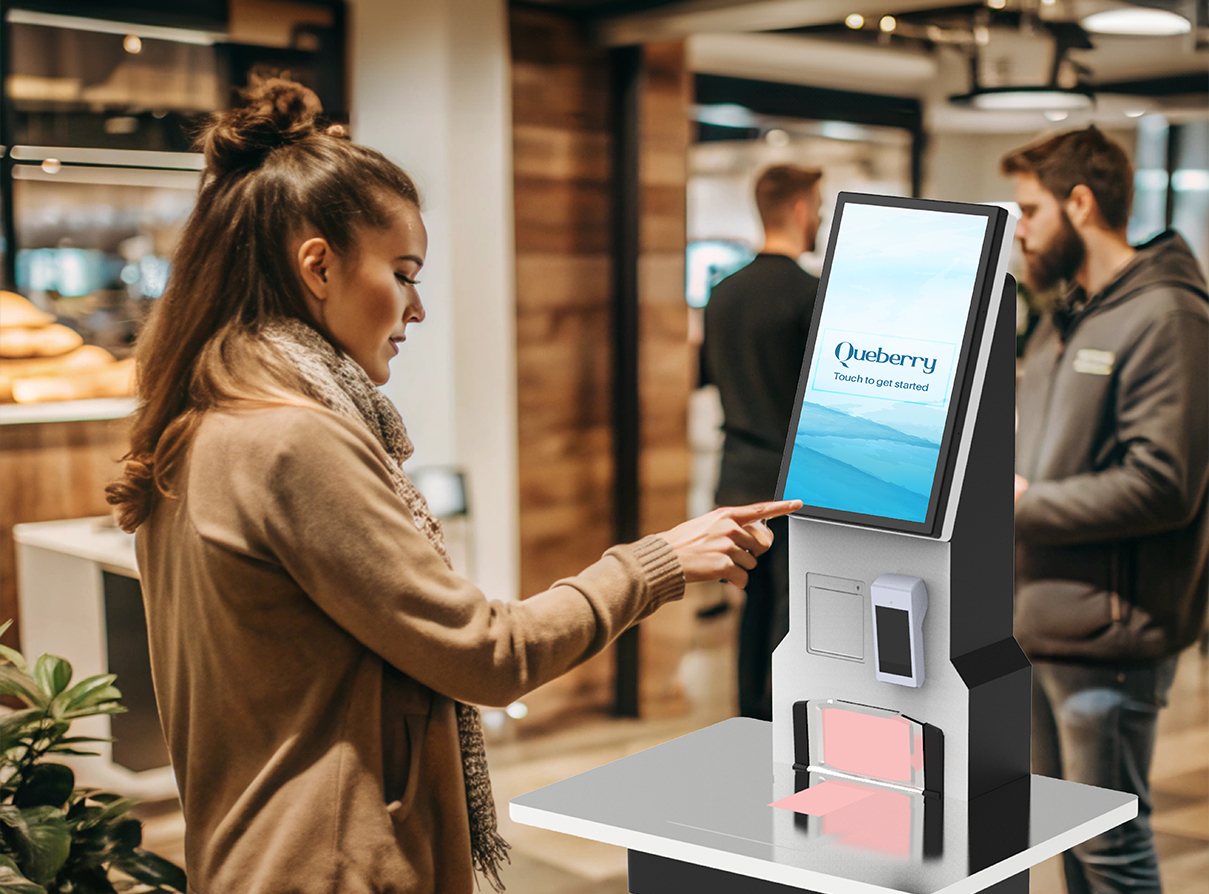
Mobile POS terminals free staff to handle transactions anywhere on the floor, so customers don't always have to line up at the counter. "Queue busting" means staff go right to forming lines during the rush, pre-scanning items or taking payments before customers even get to the register. Self-service kiosks can handle things like product searches, loyalty points, and simple purchases, so staff are free to help where they're really needed.
QuickQ by Queberry ties all this together. It uses real-time data to direct customers to the right counter with color-coded screens, automatically alerts managers when queues get too long, and delivers performance reports that help stores keep getting better, week after week.
Don't Ignore What Happens After the Visit
When it comes to managing lines in retail, most people overlook post-visit feedback. But paying attention to things like average wait time, abandonment rate, and how long each transaction takes—checking these numbers every week—keeps your queue management sharp and always improving, not just a one-time fix. QuickQ's live performance reports and centralized dashboard give managers a clear picture of what's really happening, so they can actually do something about it.
What Does a Good Queue Management System Actually Do?
A queue management system, or QMS, is a mix of software and hardware that guides customers from the moment they walk in until they're served. Instead of chaotic, unstructured lines, you get an organized, trackable system.
Here's what the best systems bring to the table:
Straightforward, first-come-first-served (FIFO) lines, so everyone gets helped in order.
Color-coded counter displays that steer customers right where they need to be—less confusion, less work for staff.
Real-time dashboards that show managers exactly how long the lines are, what the wait times look like, and how well the counters are moving people along.
Automatic alerts for managers when lines get too long, so they can jump in before things spiral.
Reports across all locations, so you can see how each store is doing from one place.
Deep analytics that reveal peak times, average service speeds, and how efficiently your team's working—basically, all the data you need to make better decisions every week.
Centralized controls, making it simple to manage the whole operation.
Less hassle for staff, since the system guides customers to the right spots, freeing up employees to focus on great service.
QuickQ by Queberry does all this, and it's built for busy retail environments where speed, fairness, and efficiency aren't just nice to have—they're essential.
Why Queue Management Matters More Than Ever in 2026
Customers today expect more. In 2026, people really notice how you treat their time. They'll leave if they feel ignored, and they won't hesitate to leave a bad review if waiting around frustrates them. With same-day delivery and instant online shopping as the norm, standing in line feels even more annoying than it used to.
The upside? Queue management tech has caught up with these demands. Now, even smaller shops can use linear queueing, intelligent counter guidance, color-coded displays, real-time monitoring, and auto-alerts to offer a smooth, fair, and respectful waiting experience.
QuickQ by Queberry has become a go-to queue management solution for retailers across the UAE and beyond. It's easy to use, offers multilingual support, and packs advanced analytics into one platform made for fast-paced retail. Boutiques, supermarkets, airport counters, big box stores—you name it. Businesses using QuickQ have cut their average wait times by as much as 30% in just three months.
How Do You Know If Your Queue Management Is Working?
The numbers tell the story. Before you put a system in, track your average wait times, how often people give up and leave, and how long each transaction takes. After you install a system, those same numbers will show whether you're actually making progress.
If you're running a store in 2026, aim for average wait times under four minutes. Go past that, and customer satisfaction drops fast. Also keep an eye on staff utilization and customer satisfaction scores—these reveal where you can still improve.
Queue management doesn't always get the attention (or funding) it deserves, but it's a game-changer. The right system won't just shorten wait times—it'll upgrade the whole shopping experience, lift employee morale, and give you the data you need to keep getting better.
Thinking about adding a queue management system to your store? QuickQ by Queberry is the best place to start. Figure out how customers move through your shop now, and let QuickQ handle the rest.
