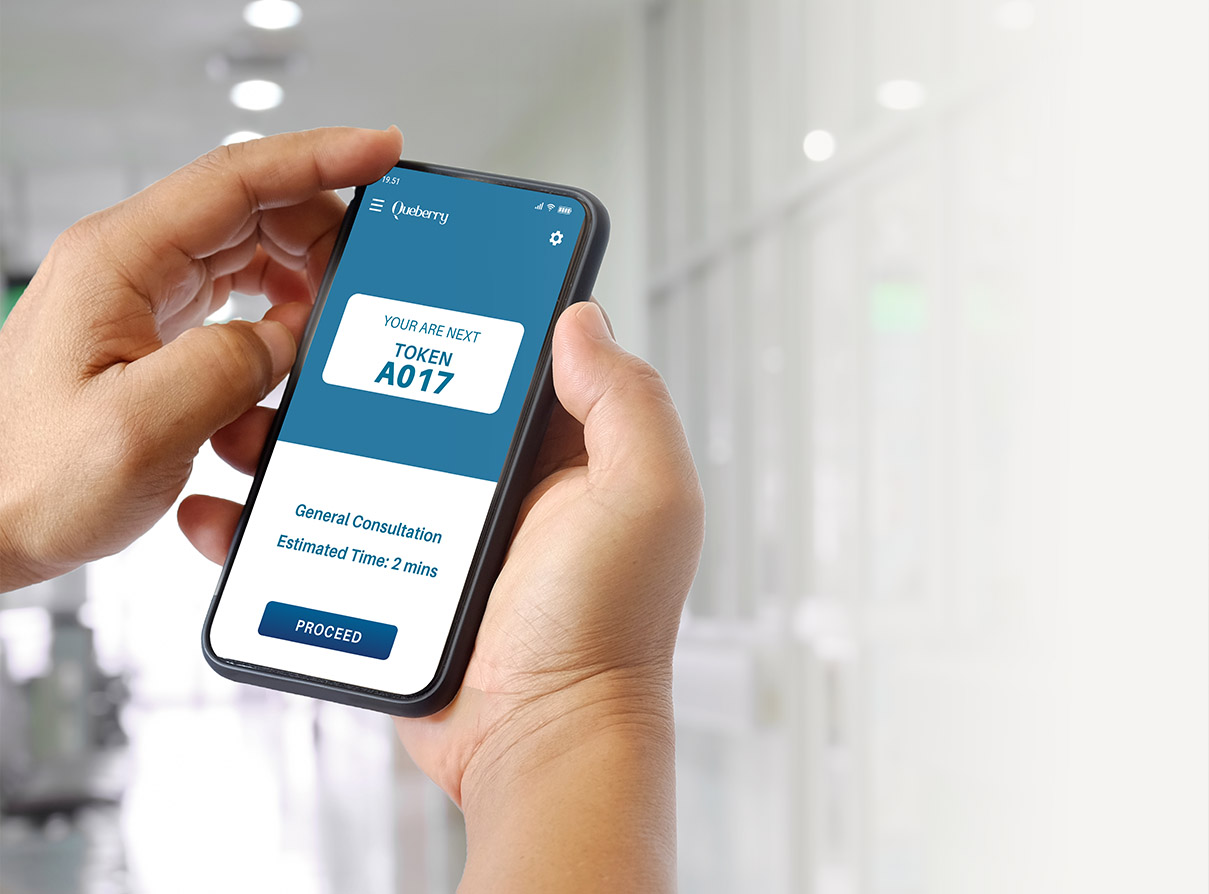

Booked Patient vs Walk-In Why Your Queue System Needs to Know the Difference

Booked Patient vs Walk-In —
Why Your Queue System Needs to Know the Difference
BY Queberry
May 5, 2026
Two types of patients walk into your clinic every day. If your queue treats them the same, you're already losing control of your day — before it even begins.
The Core Idea

A booked patient has an appointment and expects to be seen on time. A walk-in patient has no appointment and expects to wait their turn. When your queue system can't tell the difference — both groups end up frustrated, your staff gets overwhelmed, and your clinic loses trust it took years to build.

Most clinics don't have a patient problem. They have a queue problem. And the root of that queue problem is almost always the same thing — one unmanaged waiting list trying to serve two completely different types of patients at once.

This is exactly why queue management systems exist. Not just to show a number on a screen — but to intelligently handle each patient type, separately and fairly, from the moment they walk through the door.

Chapter 01

Who Are These Two Types of Patients?

Two different expectations. Two different promises your clinic has to keep. And without a proper queue management system — you can't keep either one reliably.

📅 The Booked Patient
  • Has a confirmed time slot
  • Details already in the system
  • Expects to be seen near their time
  • Quick to check in
  • Visit reason is known in advance
🚶 The Walk-In Patient
  • No appointment, no prior notice
  • Fills details at the desk on arrival
  • Expects fair order-based waiting
  • Slower to check in
  • Visit reason is unknown until seen

This patient called ahead, filled out a form, or booked online. They have a fixed time slot. They've planned their day around that appointment. Their expectation is simple: you knew I was coming, so please honour my time.

The walk-in patient showed up without any prior booking. Maybe it's urgent. Maybe they just had time today. Either way, they know they don't have a slot — and they're fine waiting. Their expectation is equally simple: I got here before that person, so I should be seen first.

Chapter 02

What Happens Without a Queue Management System?

Here's a scenario that plays out in clinics every single day — maybe even yours.

🔴 Real Problem, No System

Three walk-ins arrive at 9 AM and join the same general list as the booked patients. One of them turns out to be complex — takes 25 minutes. Now the 10 AM booked patients start arriving. They wait. No update. No explanation. The front desk is fielding "how much longer?" every few minutes. Staff stress climbs. Booked patients feel cheated. Walk-ins are confused about where they stand. The whole day unravels — not because of bad doctors, but because there was no system to manage two different queues at once.

34% of patients say wait time is their #1 complaint about clinic visits
longer check-in time for walk-ins vs pre-registered patients
60% of patient dissatisfaction is linked to poor queue communication

This is not a staffing problem. It's not a space problem. It is a queue management problem — and it has a very clear solution.

Chapter 03

What a Queue Management System Actually Does Here

A good queue management system doesn't just display numbers. It separates, tracks, and communicates two parallel patient flows — simultaneously, in real time, without your staff having to juggle it manually.

📋
Runs two queues at once One queue for booked appointments — tracked by time slot. One queue for walk-ins — tracked by arrival order. Each patient knows exactly which line they're in and why.
⏱️
Shows accurate wait times to each group Booked patients see how close they are to their slot. Walk-in patients see their position in the arrival queue. Real numbers. No guessing. No "how much longer?" at the front desk.
🔔
Alerts staff before things go wrong When the booked queue is falling behind, or the walk-in backlog is building up, the system flags it — so your team can act before patients get frustrated, not after.
📊
Gives you live visibility across the day Managers can see both queues in real time — how many are waiting, how long they've been there, and where bottlenecks are forming. That's information a paper list simply cannot provide.
📱
Communicates with patients automatically SMS or display updates keep patients informed without any manual effort. A patient who knows their wait time is a patient who waits calmly — and leaves with a better impression of your clinic.

Without a queue management system, your staff is the system — manually tracking two groups, fielding complaints, and making judgment calls under pressure all day. A queue management system takes that burden off your people and handles it automatically.

Chapter 04

Signs Your Clinic Needs a Queue Management System Right Now

🔴
Your front desk spends more time managing waiting patients than actually checking them in
🔴
Booked patients regularly wait well past their appointment time without explanation
🔴
Walk-in patients frequently don't know where they stand or how long they'll wait
🔴
Your staff has no live view of how many patients are waiting at any given moment
🔴
Patient complaints about waiting are increasing, but actual wait times haven't changed much
🔴
You're managing two types of patients on one shared paper list or single spreadsheet

If even two or three of those sound familiar — your clinic is already paying the cost of not having a queue management system. Not in one big moment, but slowly, in patient trust and staff burnout every single day.

❓ Frequently Asked Questions

Because booked and walk-in patients have completely different expectations. A queue management system handles both groups separately — honouring appointment times for booked patients while fairly tracking walk-ins by arrival order. Without it, the two groups collide and the entire day's flow breaks down.
It eliminates confusion at check-in, reduces the volume of "how long?" questions at the front desk, separates appointment and walk-in flows, prevents staff overload, and gives clinic managers live visibility into patient traffic — all in real time, without manual effort.
It creates two parallel queues — one tracked by appointment time slot, one tracked by arrival order. Each patient sees their own accurate wait estimate. Staff get alerts when either queue is building up. Both groups are served fairly, simultaneously, without one disrupting the other.
Absolutely. Even a clinic with one or two doctors sees immediate benefits — faster check-in, fewer complaints, less stress on front desk staff, and a clear picture of daily patient flow. Queue management systems are built to scale for clinics of all sizes.

Ready to transform your enterprise
with QUINN?

Join thousands of businesses using QUINN to automate processes, enhance customer experience, and drive growth through AI-powered intelligence.

Start Free Trial

Join 10,000+ companies already using QUINN

Get Started Today

No credit card required