 Queberry
Take a look at any busy hospital on an average day, and you will see that the waiting room is full of people, the nurses are struggling with paperwork, and the patients are confused about which way to turn next. This is not a new scenario. Hospitals have always had to contend with large numbers of people, emergencies, and resource constraints. However, there is a new way that many hospitals are using to overcome this issue: a Queue Management System for Hospitals.
What You'll Learn in This Guide
- Chapter 1: What Is a Queue Management System for Hospitals?
- Chapter 2: What Is the Purpose of a Queue Management System in a Hospital?
- Chapter 3: What Happens When There Is No Queue Management System?
- Chapter 4: How Does a Queue Management System Change a Hospital?
- Chapter 5: Finding the Right Fit: Providers and Software Options
- Chapter 6: The Best Hospital Queue Management System Provider

What Is a Queue Management System for Hospitals?
A Queue Management System (QMS) for hospitals is an electronic system that is designed to handle and coordinate the flow of patients through various departments and services in a hospital. It is like a modern system that replaces the traditional "take a number and wait" system with a more intelligent and real-time system.
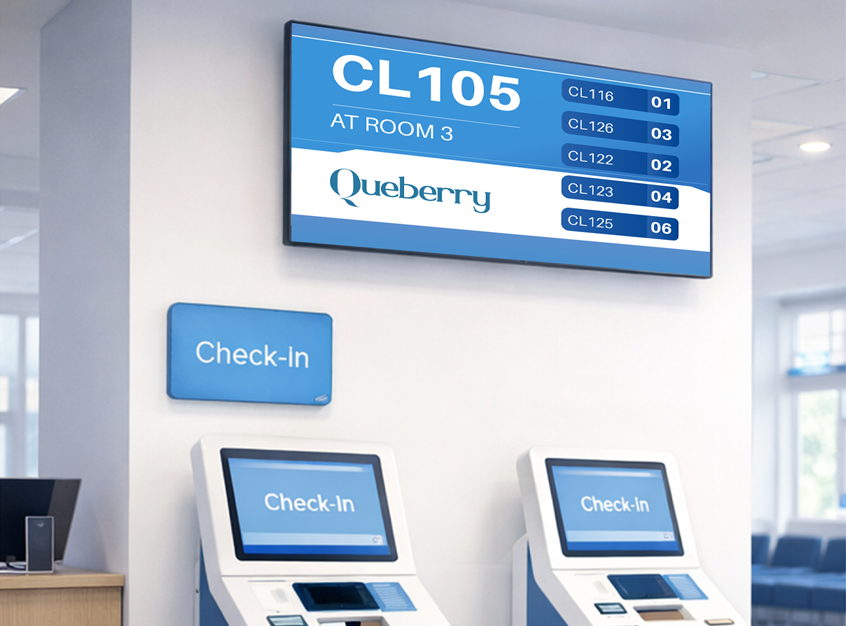
When a patient arrives at a hospital, the system is able to register the patient, direct them to the appropriate department or service, and provide them with a token or ticket number, which helps to guide them through their visit using electronic displays, SMS notifications, or mobile applications.
In short, it brings order, transparency, and efficiency to what is otherwise a chaotic environment.
What Is the Purpose of a Queue Management System in a Hospital?
The primary objective is straightforward: ensuring the right patient is in the right location at the right time without any delays or confusion. However, aside from the primary objective, a hospital queue management system has other significant uses.
Improved Patient Experience
Patients are aware of their position in the queue and the waiting time. This eliminates anxiety and irritation.
Effective Staff Allocation
Staff members have less time dealing with crowds and more time focusing on patient care.
Congestion Minimized
Patient flow management prevents congestion in the waiting area, registration desks, and consultation rooms.
Data Analysis
The hospital administration receives real-time data on waiting times, peak periods, and service delivery, which helps make informed decisions.
Priority Processing
Emergency or critical patients can be given priority in the queue without affecting the overall flow.
What Happens When There Is No Queue Management System?
The issues that arise from the absence of a structured queue management system in hospitals are quite real and are faced by patients as well as hospital staff on a daily basis. Some of the major issues faced are as follows:
Long waiting hours: Without a system in place, patients end up waiting for hours just to see a doctor or even register. This is frustrating as well as dangerous.
Waiting rooms are full to capacity: Patients and their families overflow into small waiting areas, making it a stressful environment, as witnessed during the COVID-19 pandemic, where infection was a major concern.
Overwhelming hospital staff: Receptionists and nurses are bombarded with questions such as "How long will it take?" or "Who is next?"
Omitted or missed patients: There are chances of errors in manual systems. A patient might be missed unintentionally, resulting in complaints, delayed treatment, or even death.
No emergency prioritization: It becomes difficult to identify and prioritize emergency patients without a proper system.
No visibility of performance: The hospital administration lacks information about the waiting time of patients, the slowest counters, and the performance of staff, which is not desirable.
Poor patient satisfaction. All the above factors result in poor patient satisfaction, which directly affects the credibility of the hospital.

How Does a Queue Management System Change a Hospital?
Not only does the implementation of a queue management system resolve the waiting issue, but it also changes the way a hospital functions from the inside out.
Improved Patient Experience
From registration to consultation to pharmacy, patients are led through the process step by step. They understand what's next, where to go, and how long they will have to wait.
Less Physical Congestion
Patients can wait in waiting areas or even outside the hospital while tracking their position in the queue through a mobile app or SMS alerts.
Faster Service Delivery
With streamlined processes and automated routing, doctors and hospital staff can see patients faster and with fewer hassles.
Better Accountability and Reporting
Hospital administrators can view detailed reports on patient flow, waiting times, and staff performance, making it easier to pinpoint areas for improvement.
Increased Patient Trust
When patients feel their time is valued and the process is fair, their trust in the hospital increases dramatically.
Scalability
Whether it is a small clinic or a large multi-specialty hospital, the system can be tailored and scaled to suit the size and complexity of the facility.
Finding the Right Fit: Providers and Software Options
If you are a hospital administrator or decision-maker interested in this area, you will inevitably discover various Hospital Queue Management System Providers in the market. Selecting the appropriate one depends on your hospital's requirements, such as the number of patients, the complexity of the departments, the budget, and the ability to integrate with your current hospital management software.
If you are looking for the Best Hospital Queue Management Software, there are a few key considerations:
- User friendliness: The software should be user-friendly enough for patients and hospital staff to use without much training.
- Integration functionality: The software should be able to integrate with your hospital's current systems, such as appointment scheduling, electronic health records, and billing.
- Multi-channel functionality: The software should be able to support digital signage, mobile apps, SMS notifications, and physical kiosks.
- Real-time analytics: The software should provide real-time analytics to management so that they can see what is happening on the floor at any given time.
- Customer support and customization: Each hospital is unique. The vendor should provide a solution that can be customized for your needs.
There is no one-size-fits-all solution for this. The aim is to find a Queue Management System for Hospitals that actually suits your environment, rather than just a solution that looks good on paper.
The Best Hospital Queue Management System Provider
When it comes to hospital queue management, choosing the right system is critical for ensuring smooth patient flow and efficient operations. Not all solutions are built with healthcare in mind, which is why selecting a specialized provider makes all the difference.
1. Queberry — Best Hospital Queue Management Software
Queberry leads the way as one of the most able and hospital-centric Queue Management System for Hospitals in the market today. Its uniqueness lies in the fact that it is designed exclusively for the healthcare industry, as opposed to other industries like retail or banking. It has a clean patient interface with token numbers, estimated waiting times, and step-by-step instructions throughout the departments. For hospital management, the real-time dashboard provides complete visibility into the active queues, service times, and departmental capacity. It has support for digital kiosks, display screens, SMS alerts, and mobile queue tracking – allowing patients to wait anywhere and stay updated nonetheless. Queberry is highly adaptable to various hospital sizes, ranging from single-specialty clinics to large multi-department hospitals, and comes with dedicated support. For hospitals seeking the best of ease, functionality, and healthcare-centric design, Queberry is the obvious number one choice.
Final Thoughts
A hospital is one of the most critical locations in any given community. It is where people are most vulnerable – in pain, worried, and in need of assistance. The minimum that a hospital can do is ensure that the process of obtaining assistance is as seamless and dignified as possible.
A Queue Management System for Hospitals is more than a nicety or an upgrade. It is a useful tool that has the ability to solve a very human problem – the problem of waiting without knowing why, how long, or what happens next.
When hospitals optimize patient flow, it is a win-win situation for all parties involved – patients feel cared for, hospital staff are less stressed, and the hospital as a whole functions better. This is a change that is much needed.
