CASE STUDY

RTA DUBAI

A Centralized Queue Management Ecosystem Across Multiple Government Departments

35+ LOCATION
3 DEPARTMENTS
1 PLATFORM

POWERING CONNECTED PUBLIC SERVICES

RTA1

Project Overview

Roads and Transport Authority (RTA), Dubai is one of the UAE's largest public service organizations, managing high-volume visitor operations across customer service, employee service and vehicle licensing departments.

To streamline queue handling across multiple service environments, Queberry implemented a centralized Queue Management System (QMS) designed to unify operations, improve visitor flow and support real-time service monitoring across the organization.

The solution was deployed across 35+ locations in Dubai, connecting multiple departments through one unified platform with multilingual support, smart digital token management and real-time integrations.

Client
Roads and Transport Authority (RTA), Dubai — UAE
Solution
Centralized Queue Management System (QMS)
Departments
Customer Happiness Center (CHC)
Employee Happiness Center
Vehicle Licensing & Testing Centers
Deployment Scale
35+ Locations Across Dubai
Integrations
Scala Digital Display System • Microsoft Power BI • Smart Digital Token Infrastructure
RTA Dubai Queue Management System

The Challenge

Managing visitor flow across multiple RTA departments required a system capable of handling different service environments, workflows and operational requirements — all while maintaining a seamless public experience.

Each department operated with unique queue structures and service processes, creating the need for a centralized platform that could unify operations without disrupting department-level flexibility.

The platform needed to support:
✓ High daily visitor volumes
✓ Multilingual interactions
✓ Real-time queue visibility
✓ Operational monitoring across locations
✓ Smart service routing
✓ Continuous uptime across distributed centers
RTA Challenge

Key Operational Challenges

Multiple Departments,
Different Workflows

Each department required customized queue logic tailored to its own operational structure.

Centralized Visibility
Across Locations

Management teams needed real-time monitoring and control from a unified platform.

Multilingual
Public Interaction

Support for Dubai's diverse visitor base through multilingual service experiences.

Real-Time Service
Coordination

Queue information needed to sync instantly across counters, displays and service areas

Enterprise-Level
Reliability

The platform had to remain operational across 35+ distributed locations with high availability architecture.

Centralized Ecosystem

To manage operations across multiple RTA departments and locations, Queberry implemented a centralized Queue Management System built on a unified operational architecture.

The platform connects Customer Happiness Centers, Employee Happiness Centers and Vehicle Licensing & Testing Centers through a single ecosystem — enabling centralized queue operations and service monitoring while supporting department-level customization.

This centralized approach enabled RTA to standardize service operations across locations while maintaining the flexibility required for different departmental processes.

One Platform. Multiple Operational Environments.
Centralized Queue Management Platform
Customer Happiness Centers

Public-facing service environments designed to handle high visitor volumes with multilingual support and guided queue experiences

Employee Happiness Centers

Dedicated workflows optimized for internal employee service operations and staff coordination

Vehicle Licensing & Testing Centers

Integrated queue handling for vehicle inspection, licensing and testing workflows across distributed locations.

Centralized Operational Advantages

Unified management
across 35+ locations

Customized workflows
for each department

Real-time queue
synchronization

Scalable multi-location
deployment

Simplified
operational monitoring

Consistent public
service experience

Multilingual Public Experience

Dubai’s diverse visitor ecosystem required a queue management experience that could support users across different languages, service needs and accessibility requirements

To improve usability across public-facing environments, the RTA Customer Happiness Center (CHC) experience was designed with multilingual interaction flows, simplified navigation and accessibility-focused screen structures.

The system enables visitors to interact with queue services in the language they are most comfortable with, helping improve accessibility across high-volume public environments

Designed for a Diverse Visitor Base

Supported multilingual interactions including:

Arabic English Malayalam Urdu French Chinese Russian
Additional languages can be configured based on operational requirements.

Accessibility-Focused Experience

Special screen considerations were implemented to improve usability for people of determination.

Accessibility First

Optimized screen layouts, larger touch targets and clear visual hierarchy for all visitors.

Simplified Interaction Flows Clear Visual Hierarchy Large Touch Controls High Visibility Information Inclusive Accessibility

Experience Objectives

Faster Public Interaction

Reduce friction during queue registration and service navigation.

Improved Visitor Accessibility

Create a more inclusive service experience.

Consistent Communication

Ensure information remains clear across multiple languages.

Scalable User Experience

Support future language expansion and evolving requirements.

Smart Queue Operations

The Queberry platform was designed to move beyond traditional queue handling by introducing intelligent, real-time queue operations across RTA service environments.

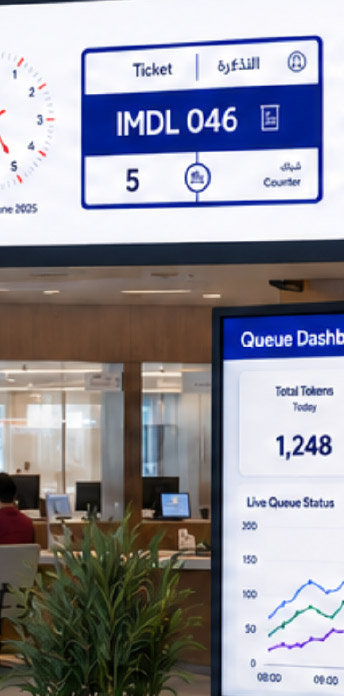
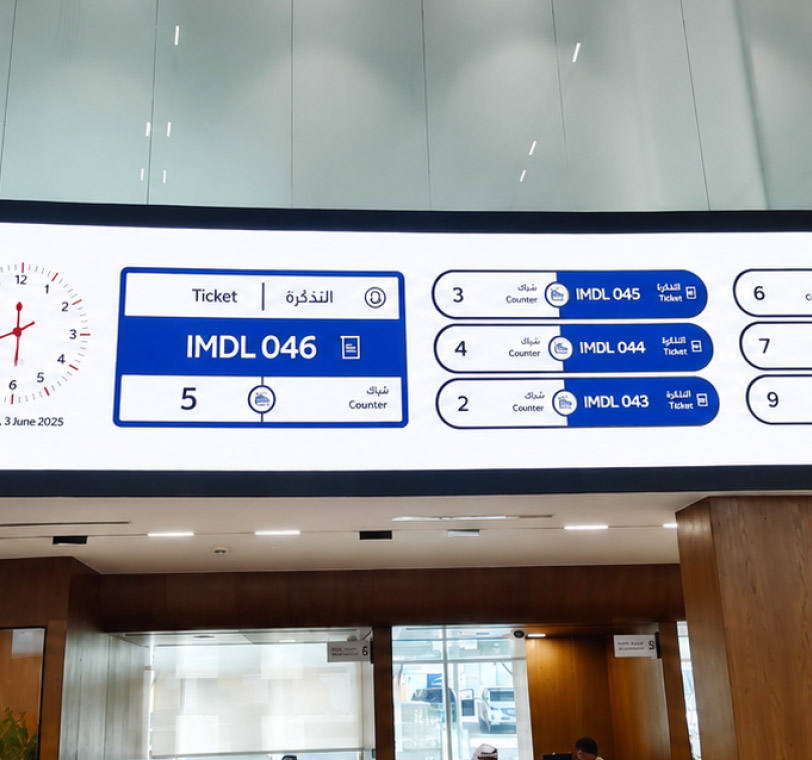
Instead of relying on conventional paper-based workflows, the system uses smart digital tokens connected to centralized operational logic — enabling accurate queue tracking, real-time coordination and improved service visibility across locations.

The platform continuously synchronizes queue activity between counters, display systems and operational dashboards, helping teams manage visitor flow more efficiently.
Operational Benefits

Reduced dependency on manual queue handling

Faster response to queue congestion

Improved real-time service coordination

Seamless synchronization between systems

Increased visibility across service environments

More connected public service experience

Smart Queue Operations

Intelligent Queue Infrastructure

Smart Digital Tokens

Visitors receive smart digital tokens connected to live queue workflows and real-time service tracking.

Real-Time Queue Synchronization

Queue information updates instantly across counters, waiting areas and digital display systems

Automated Wait & Service Monitoring

The system tracks token wait times and service durations across all operational environments

Dynamic Service Coordination

Operational teams gain real-time visibility into queue movement and overall service performance.

Integrated Display Ecosystem

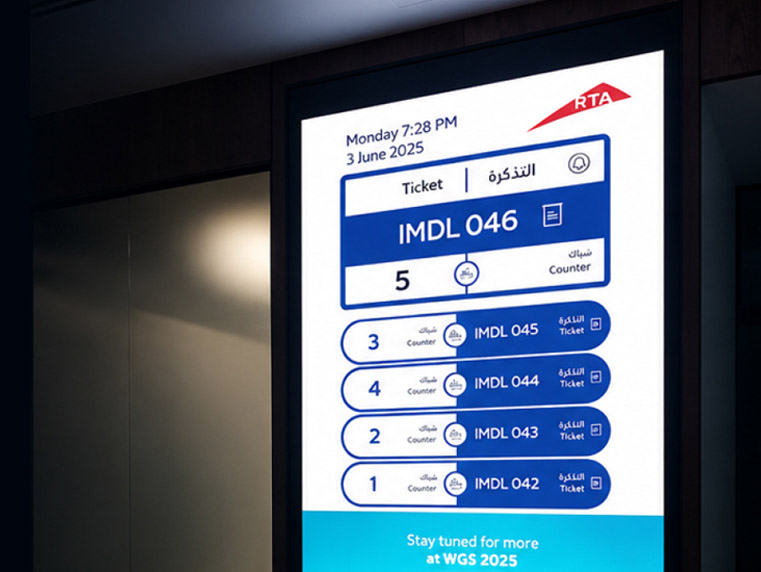
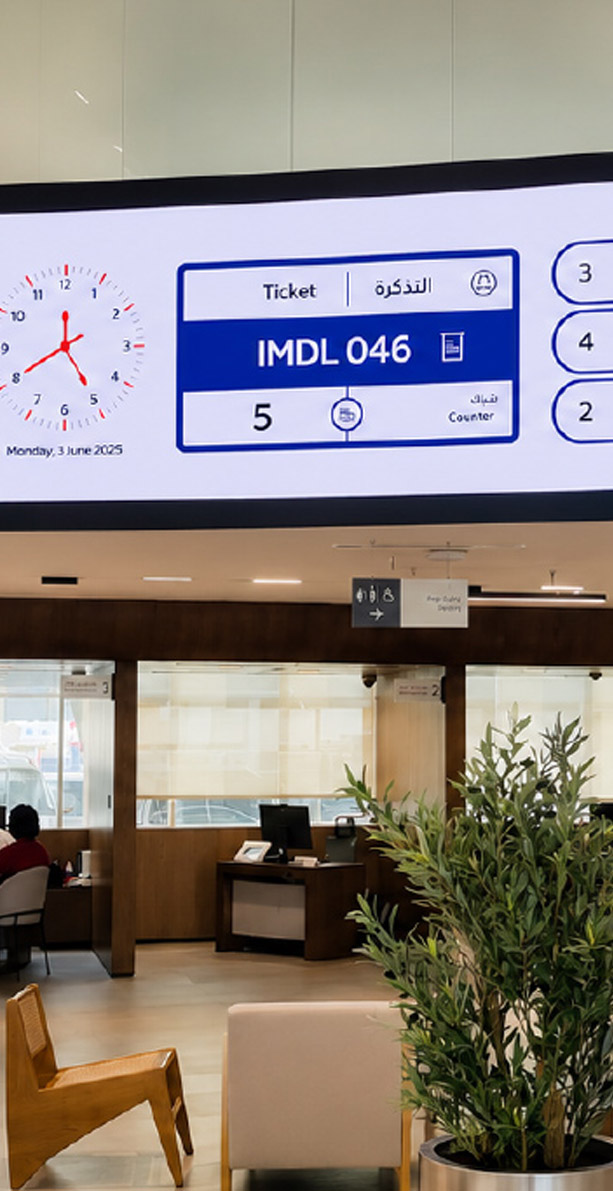
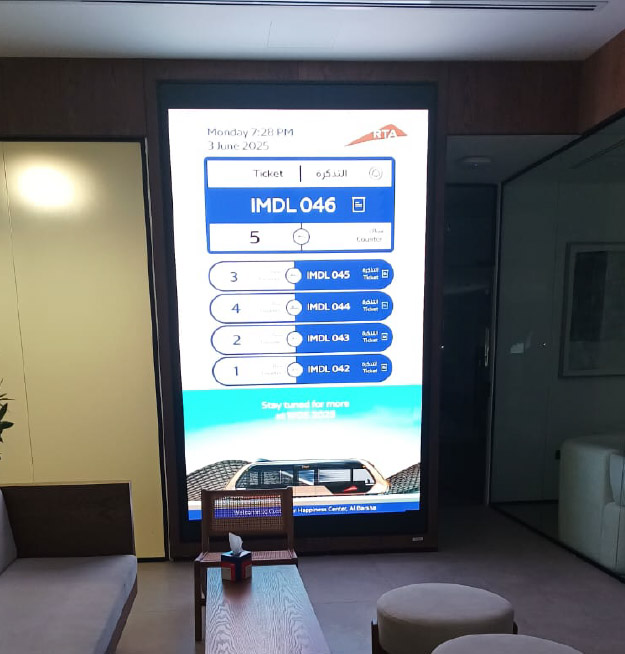
The platform was integrated with the Scala Digital Display System to provide real-time queue visibility across service areas and waiting halls.


This enabled synchronized communication between the queue platform and display infrastructure, giving visitors clear visibility into live queue activity.

Real-Time Monitoring & Analytics

To support operational visibility across distributed RTA service environments, the Queberry platform was integrated with Microsoft Power BI for centralized analytics and performance monitoring.

The system enables management teams to monitor queue activity, visitor flow and service operations in real time across multiple locations through a unified reporting environment.

The platform enabled management teams to monitor service performance through centralized real-time reporting.

Operational Outcomes

Improved operational visibility

Centralized performance monitoring

Real-time reporting capabilities

Better service oversight across locations

Faster operational decision-making

More connected service operations

Operational Intelligence Through Data

Live Queue Monitoring

Track queue movement and operational activity across locations in real time.

Service Performance Visibility

Monitor service durations, wait times and operational efficiency through centralized dashboards.

Cross-Location Reporting

Access unified reporting across Customer Happiness, Employee Happiness and Vehicle Licensing Centers.

Data-Driven Operations

Support informed operational decisions using real-time analytics and reporting insights.

Power BI
Integration

The platform was integrated with Microsoft Power BI to provide centralized reporting and operational analytics across the RTA ecosystem.


This integration enabled management teams to monitor performance trends, operational bottlenecks and queue activity through a unified dashboard environment.

Deployment
Scale & Infrastructure

The Queberry Queue Management System was deployed across more than 35 RTA locations in Dubai, creating a connected service infrastructure across multiple RTA environments.

To support uninterrupted public service operations, the platform was built on a centralized high-availability architecture designed for reliability, scalability and continuous system availability across distributed locations. This infrastructure approach enabled RTA to manage queue operations centrally while maintaining stable performance across every connected center.

Built for Large-Scale Operations

35+ Connected Locations

A unified operational ecosystem deployed across multiple RTA service centers throughout Dubai

High Availability Architecture

Designed to remain operational across distributed environments with minimal service interruption.

Centralized Operational Control

Queue operations, workflows and monitoring managed through one centralized platform.

Scalable Infrastructure

The system architecture supports future expansion across additional service environments.

Enterprise-Grade Infrastructure

The platform was designed to support large-scale public service operations across customer, employee and licensing environments

Operational Impact

The Queberry Queue Management System enabled RTA to establish a more connected public service environment across multiple departments and locations in Dubai.

By bringing queue operations, service visibility and monitoring into one ecosystem, the platform helped streamline visitor handling while supporting the scale and operational demands of high-volume government service environments.

Operational Impact

Key Outcomes

Unified operational experience across departments

Improved visibility into live service operations

More accessible public-facing service environments

Better coordination between queue and display systems

Reliable multi-location operational management

Scalable foundation for future service expansion

A centralized queue management ecosystem designed to support modern public service operations across Dubai’s transport and licensing infrastructure.

Ready to transform your enterprise
with QUINN?

Join thousands of businesses using QUINN to automate processes, enhance customer experience, and drive growth through AI-powered intelligence.

Start Free Trial

Join 10,000+ companies already using QUINN

Get Started Today

No credit card required